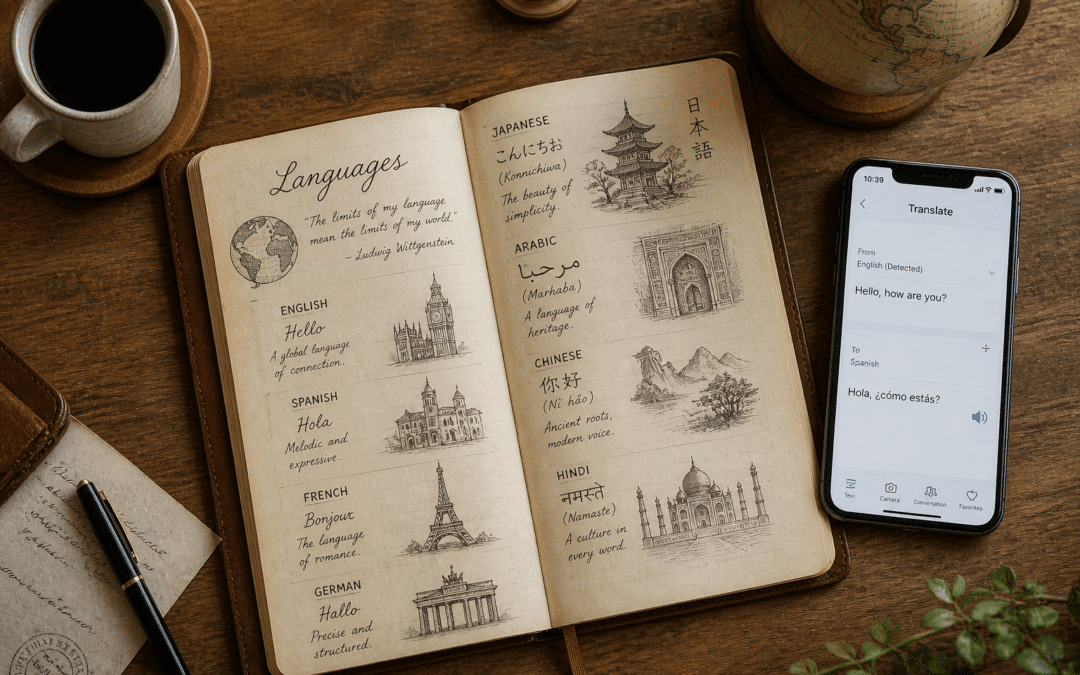
Why linguistic diversity is the heart of meaningful communication Linguistic diversity encompasses much more than just different vocabularies. It reminds us that, while we all feel the same fundamental emotions, the words we use to describe them can vary greatly from one part of the world to another.Although we often think of translation as a simple exchange of words, it is actually an important form of cultural preservation.Consider, the Russian word toska, for example. Translators often render it as “melancholy” or “longing”, but neither of these words truly captures its essence. Toska is a deep, spiritual ache, a pain with no specific cause, a yearning for something that may not exist. Then there’s the Portuguese word saudade: a profound, melancholic longing for a place, person or feeling that may never return. English speakers need entire sentences to express what other languages capture in a single, untranslatable word.This is a beautiful reminder that linguistic diversity gives each culture a unique emotional lens. Examples of linguistic diversity in action There are many words around the world that carry entire philosophies and concepts which cannot be boxed into an English equivalent. Here are some of these untranslatable gems that embody unique emotional worlds: Hiraeth (Welsh): Nostalgia for a home or place you cannot return to or that never existed. Meraki (Greek): Doing something with complete soul, love or creativity. Komorebi (Japanese): Sunlight filtering through tree leaves. A single noun for a poetic visual moment. Apapachar (Spanish): To give a big hug with the soul, not just the arms. Gezellig (Dutch): The warmth of being with loved ones; that cozy and deeply comforting...
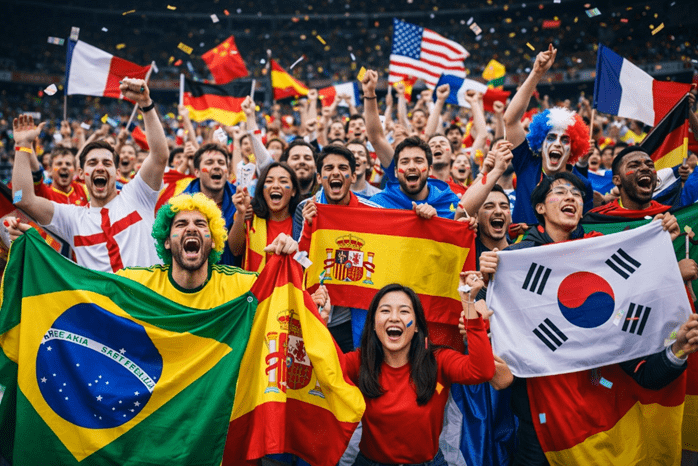
Sports translation in the World Cup Sports translation enables international tournaments to become global spectacles, bringing people from different cultures and backgrounds together. For example, at events such as the FIFA World Cup, fans from around the world come together to share their passion for the sport, despite speaking different languages. Sports translation enables audiences around the world to follow the same matches, teams and stories in real time, whether through official broadcasts or social media posts. In this way, sports translation plays a vital role in breaking down cultural and linguistic barriers, turning soccer into a truly global experience. The global reach of soccer Sports translation is essential for expanding the global reach of soccer. International tournaments attract viewers from all over the world, creating a high demand for multilingual media content. As a result, international soccer events become more accessible, thus reinforcing the sport’s position as one of the most globalized. Cultural differences in language and sports translation The translation of sports terminology is complex and dynamic because sports terms are described differently across languages. Distinct expressions, tones and styles are used when discussing sport, reflecting supporters’ unique understanding of and experience of soccer. The same applies in stadiums, where supporters have unique songs and chants during matches that are difficult to translate convey into other languages. For this reason, sports translation often requires adaptation rather than direct translation. In the context of English football, for instance, if a team has not conceded a goal to the opposing team, the term “clean sheet” is used. Notably, British English speakers do not use the standard English term ‘zero’,...
What exactly is localization? “What exactly is localization and why is it so important today?” is a question worth asking in a globalized world where the internet and social media are bringing us all closer together. It is not only important that your product is available in several languages. It should also be correctly adapted to the target culture. The following article aims to provide information on the concept of localization and the benefits of localizing a product. The industry is relatively young. According to seasoned localization experts O’Hagan and Mangiron, the term was first used by software developers during the late 1980s. This was a time when companies found out that taking their product overseas was advantageous overall. The term “localization” refers to the process of adding and adapting cultural and linguistic elements that are foreign to the original product so that it is received positively in a foreign market. The term is commonly abbreviated to “l10n”. What is the difference between localization and translation? At first glance, you might think that localization is just another way of saying translation. However, this misconception is on the same level as thinking that translation is a simple language conversion, rather than a complex process that often involves technical terminology and attention to detail. In this sense, while translation involves the conversion of a text and its terms from one language to another, localization focuses more on the target culture of the product and its linguistic particularities. Ultimately, the main aim is to reach a wider market overall. For example, if you want your product to resonate with someone in the...
Translation companies: Partners for your multilingual business Language company services are a cornerstone of successful global interactions, providing the necessary support to overcome language barriers. In today’s multicultural environment, communicating clearly and effectively with diverse audiences is essential for business growth. Quality translation services ensure companies can share their vision and values, facilitating stronger connections in international markets. With the right translation company, businesses can effortlessly navigate the complexities of multilingual communication. Which translation companies are right for your business? Choosing the right translation company is crucial for any business looking to expand globally. When evaluating translation companies, consider their expertise, range of services, and client reviews. A reputable translation company should offer not only basic document translation but also specialized options such as certified translation, marketing translation, software translation, technical and legal translation, and voice-over services to ensure that the nuances of your specific content are preserved. At LingoStar, we specialize in the IT and business sectors and deliver tailored solutions that meet your needs. Additionally, you can check our client reviews and testimonials to see the reliability and quality of our services. Our professional translators ensure that your message resonates with your target audience, taking into account both linguistic accuracy and cultural adaptation. Translation companies’ quality assurance Quality assurance is essential for any reputable translation company. At LingoStar, we implement rigorous processes and professional standards to ensure the accuracy and consistency of our translations. Our quality assurance includes multiple rounds of editing and proofreading, ensuring that your content is not only translated, but also polished to perfection. This commitment to quality helps us build long-term partnerships with our clients, ensuring they receive exceptional service every time. Long-term partnership...
Multilingualism of India Let’s talk about India and the languages in India. India is a country largely known for its cultural and linguistic diversity. It boasts over 700 languages. At the same time, it is home to the world’s most linguistically diverse population, showcasing India’s unique tapestry reflecting its rich heritage and history. Therefore, for a business aiming to tap into this diverse market, effective communication is key. As a leading language translation company, LingoStar translators recognize the crucial importance of embracing linguistic diversity in building meaningful connections and fostering growth. The major languages in India Hindi is the official language of India, as declared by the Indian government. It is spoken by nearly 44% of the population and it acts as a lingua franca in many parts of the country. Alongside Hindi, English is one of the languages in India that holds a significant place as an associate official language. Other major languages in India include Bengali, Telugu, Marathi, Tamil, and Urdu, each with millions of speakers and a deep literary tradition. Why do languages matter in India? Effective communication between the languages of India goes beyond mere translation; it also involves the localization of its cultures. Each state often has its own official language, such as Bengali in West Bengal, Tamil in Tamil Nadu, Telugu in Andhra Pradesh, and Marathi in Maharashtra. Therefore, if you do business in India, this means tailoring your message to align with local sensibilities and cultural nuances. As a result, consumers are more likely to engage with content that acknowledges and respects their linguistic and cultural identities. The importance of translating languages...
Interpreting services for all your needs Interpreting services are needed in various social situations to facilitate effective communication between different parties who do not share the same language. Some of the most common interpreting modes are consecutive interpreting, simultaneous interpreting, whispered interpreting, also known as chuchotage, and sight translation. In this article, we introduce you to the main mode of interpreting for which we offer interpreting services: consecutive interpreting. What is consecutive interpreting? Unlike simultaneous interpreting, where the interpreter interprets the speaker’s words into the audience’s language within a few seconds, consecutive interpreting takes place after the speaker has finished speaking. While the speaker is speaking, the interpreter takes notes in order to produce an accurate summary of the speech in the other language. Simultaneous interpreting is best suited for meetings where there is one keynote speaker, while consecutive interpreting is more suitable for meetings with several speakers where there will be back-and-forth communication. At LingoStar, we have extensive experience in interpreting projects, especially consecutive interpreting. We regularly work with professional consecutive interpreters on projects in a variety of fields, usually public or social services, including business meetings, legal proceedings, and medical appointments. What to look for in a consecutive interpreter What does it take to become a consecutive interpreter? Can anyone do it, or does it require special training and skills? A professional interpreter needs to practise a number of skills on a regular basis in order to deliver a coherent and structured speech that conveys the same information as the original speech, with the same tone, register, and intonation. Every consecutive interpreter must be proficient in note-taking....