Why linguistic diversity is the heart of meaningful communication
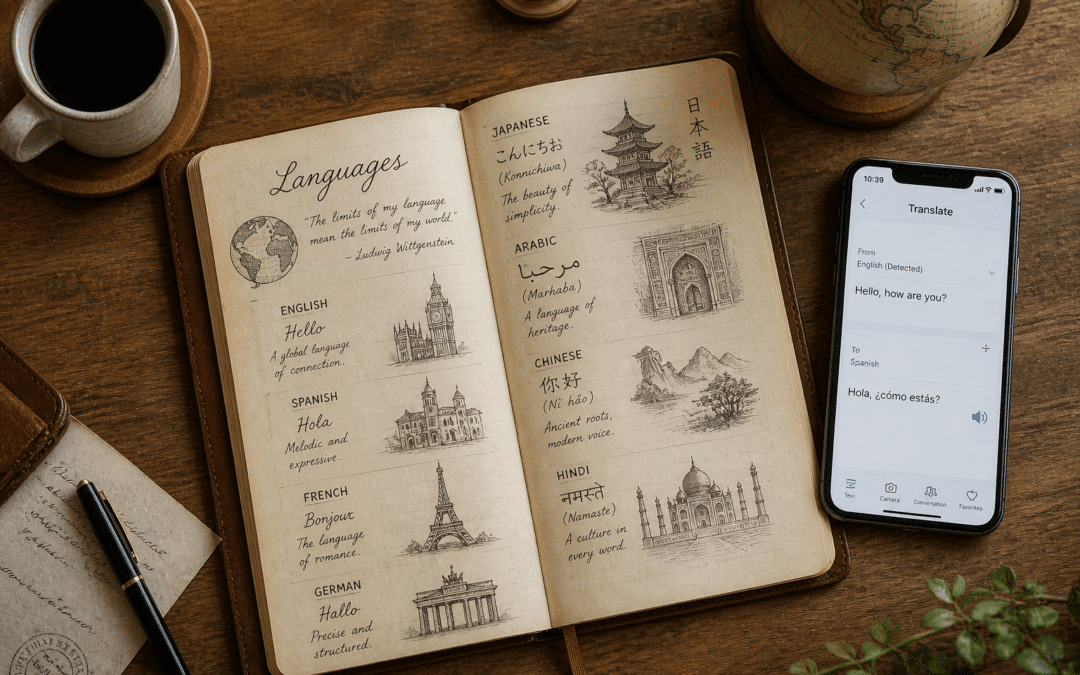
Linguistic diversity encompasses much more than just different vocabularies. It reminds us that, while we all feel the same fundamental emotions, the words we use to describe them can vary greatly from one part of the world to another.
Although we often think of translation as a simple exchange of words, it is actually an important form of cultural preservation.
Consider, the Russian word toska, for example. Translators often render it as “melancholy” or “longing”, but neither of these words truly captures its essence. Toska is a deep, spiritual ache, a pain with no specific cause, a yearning for something that may not exist. Then there’s the Portuguese word saudade: a profound, melancholic longing for a place, person or feeling that may never return. English speakers need entire sentences to express what other languages capture in a single, untranslatable word.
This is a beautiful reminder that linguistic diversity gives each culture a unique emotional lens.
Examples of linguistic diversity in action
There are many words around the world that carry entire philosophies and concepts which cannot be boxed into an English equivalent. Here are some of these untranslatable gems that embody unique emotional worlds:
- Hiraeth (Welsh): Nostalgia for a home or place you cannot return to or that never existed.
- Meraki (Greek): Doing something with complete soul, love or creativity.
- Komorebi (Japanese): Sunlight filtering through tree leaves. A single noun for a poetic visual moment.
- Apapachar (Spanish): To give a big hug with the soul, not just the arms.
- Gezellig (Dutch): The warmth of being with loved ones; that cozy and deeply comforting feeling.
- Hygge (Danish): A contented feeling from simple pleasures like candlelight and close company.
These words highlight the “emotional intelligence” that exists within a community and remind us that this is the final frontier for technology. While AI can provide a dictionary definition, it cannot grasp the cultural significance of these concepts. This is why machine translation, despite its speed, regularly fails with such terms.
AI can replace words, but it cannot understand why a word matters. Would you like to know more about AI and its limitations? Explore this related article for additional insight.
The future of linguistic diversity in the age of AI
Does AI pose a threat to linguistic diversity? In some ways, yes. As automated translation becomes more widely available, there is a risk that the distinctive features of local dialects will be lost in the interest of speed. Culturally unique words like apapachar are often mistranslated as simply “hug” or “cuddle,” thereby losing their soulful depth.
However, it is important to remember AI is a tool, not a replacement. The future of linguistic diversity depends on humans choosing to preserve it. Translators, localizers and transcreators do not simply convert phrases; they carry entire worlds of meaning across borders.
Yes, AI can help with speed and volume, but it cannot experience toska or truly apapachar another person. Only someone who has lived with a language can decide whether to translate, explain or leave a beautiful word untranslated.
Today, the role of professional translators is not just to act as a “human dictionary”, but also to safeguard cultural identity. By choosing to work with human experts who understand these untranslatable nuances, companies can ensure that their message not only reaches a new market, but also truly belongs there.
How transcreation brings untranslatable words to life
So how do we capture the warmth of words like apapachar or gezellig in English, Spanish or Japanese? A literal translation won’t work, but transcreation certainly will. Transcreation adapts not just the words of a message but also their emotion, tone and cultural essence. At LingoStar, our transcreators don’t ask “What does this word mean?”, but “What effect does this word have on the reader?”, before rebuilding that same feeling in another language.
Do you have a marketing campaign, slogan or brand story that needs to travel across borders without losing its heart? Our team of professional transcreators guarantees that no apapachar will be flattened into a cold, generic “hug”. We offer transcreation services in a wide range of language combinations – check out the full list on our website!
Do you have a project in mind? Email us at info@lingo-star.com and ask for a free quote, we’re here to help.
Feel free to download our free eBook: How to Expand your Online Business. It’s perfect for anyone looking to expand their business globally!

Do you love language, translation and untranslatable words? Follow us on Instagram, Facebook, X, YouTube and LinkedIn for the latest updates.
Explore more articles on our blog and subscribe to our newsletter to join the LingoStar community!