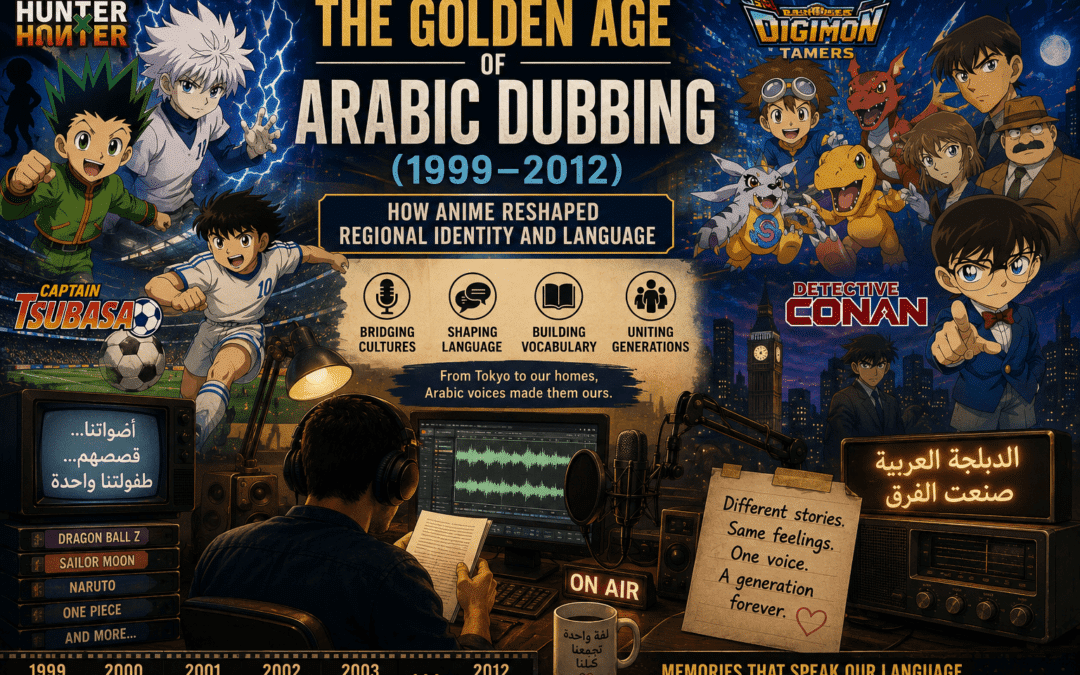
Arabic dubbing from 1999 to 2012: The MBC hit With the expansion of its media and the popularity of its music and cinema, the Middle East and North African region experienced a new evolution in this field with the introduction of Arabic dubbing of various South American soap operas in the late ’80s and early ’90s. The dubbing was a massive success, leading to the expansion of this audiovisual translation method and its use instead of subtitling. This movement forever changed how generations of viewers connected with foreign media. It also allowed localized television tracks to evolve from simple text translations into a core part of regional pop culture identity. As satellite dishes spread across rooftops, audiovisual media stepped in to bridge cross-border divides. Families gathered to watch the same programs, which became cultural landmarks. Young children and teenagers became accustomed to this media, which reshaped the presentation of drama. These audio choices greatly influenced the public. How the Arabic dubbing of Turkish soap operas reshaped regional identity and language The founding of the MBC Groupe, which is the short acronym of Middle East Broadcasting Centre in 1991 marked a shift in Arabic primetime TV. The Saudi-owned studio aired two Turkish series: Noor (Gümüş) and Sanawat Al-Dayaa’ (English: The Lost Years) (Ihlamurlar Altinda). The MBC Group took the creative initiative to dub these shows in Syrian Arabic, also known as the Shami dialect. The result of this initiative was unexpected. The soft cadence of the Levantine dialect felt intimate, and more relatable to the average Arab household. Yet, its phonetic clarity made it easily comprehensible across different sub-regions. The...
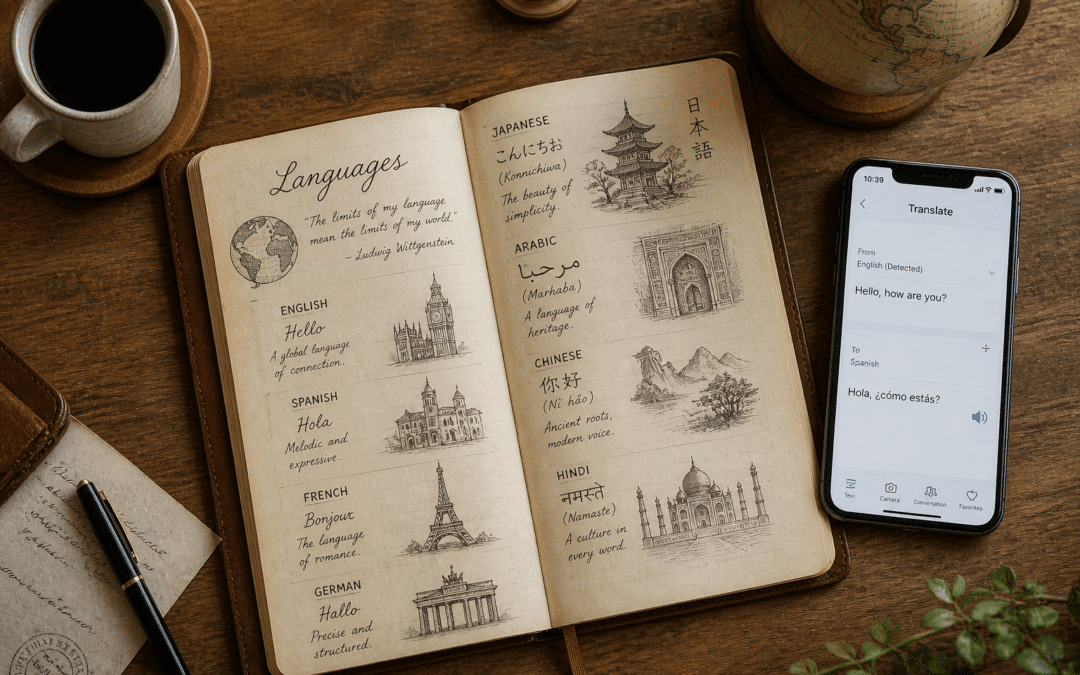
Why linguistic diversity is the heart of meaningful communication Linguistic diversity encompasses much more than just different vocabularies. It reminds us that, while we all feel the same fundamental emotions, the words we use to describe them can vary greatly from one part of the world to another.Although we often think of translation as a simple exchange of words, it is actually an important form of cultural preservation.Consider, the Russian word toska, for example. Translators often render it as “melancholy” or “longing”, but neither of these words truly captures its essence. Toska is a deep, spiritual ache, a pain with no specific cause, a yearning for something that may not exist. Then there’s the Portuguese word saudade: a profound, melancholic longing for a place, person or feeling that may never return. English speakers need entire sentences to express what other languages capture in a single, untranslatable word.This is a beautiful reminder that linguistic diversity gives each culture a unique emotional lens. Examples of linguistic diversity in action There are many words around the world that carry entire philosophies and concepts which cannot be boxed into an English equivalent. Here are some of these untranslatable gems that embody unique emotional worlds: Hiraeth (Welsh): Nostalgia for a home or place you cannot return to or that never existed. Meraki (Greek): Doing something with complete soul, love or creativity. Komorebi (Japanese): Sunlight filtering through tree leaves. A single noun for a poetic visual moment. Apapachar (Spanish): To give a big hug with the soul, not just the arms. Gezellig (Dutch): The warmth of being with loved ones; that cozy and deeply comforting...
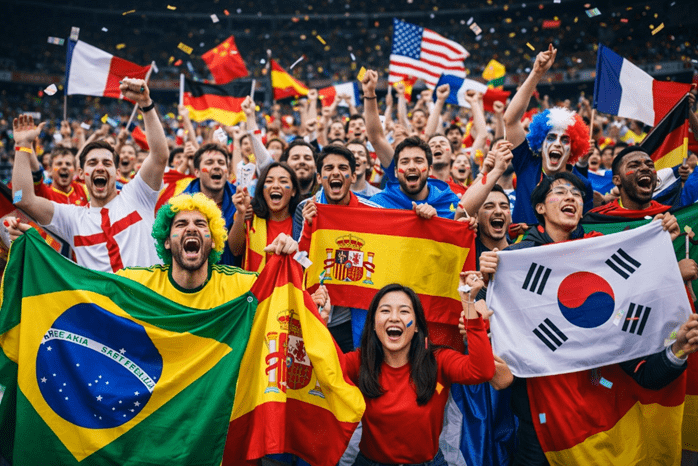
Sports translation in the World Cup Sports translation enables international tournaments to become global spectacles, bringing people from different cultures and backgrounds together. For example, at events such as the FIFA World Cup, fans from around the world come together to share their passion for the sport, despite speaking different languages. Sports translation enables audiences around the world to follow the same matches, teams and stories in real time, whether through official broadcasts or social media posts. In this way, sports translation plays a vital role in breaking down cultural and linguistic barriers, turning soccer into a truly global experience. The global reach of soccer Sports translation is essential for expanding the global reach of soccer. International tournaments attract viewers from all over the world, creating a high demand for multilingual media content. As a result, international soccer events become more accessible, thus reinforcing the sport’s position as one of the most globalized. Cultural differences in language and sports translation The translation of sports terminology is complex and dynamic because sports terms are described differently across languages. Distinct expressions, tones and styles are used when discussing sport, reflecting supporters’ unique understanding of and experience of soccer. The same applies in stadiums, where supporters have unique songs and chants during matches that are difficult to translate convey into other languages. For this reason, sports translation often requires adaptation rather than direct translation. In the context of English football, for instance, if a team has not conceded a goal to the opposing team, the term “clean sheet” is used. Notably, British English speakers do not use the standard English term ‘zero’,...
Lyrics translation in global music With music reaching international audiences through digital platforms, lyrics translation has become increasingly important. Today, many artists incorporate multiple languages into their songs, enabling them to connect with listeners from different cultures and regions. However, when fans do not understand the original language, translating the lyrics becomes essential for fully appreciating the meaning behind the music.Artists such as Shakira and the South Korean group BTS are well-known examples of multilingual performers with global audiences. Their songs often combine several languages, cultural references, that reflect their backgrounds. Lyrics translation helps international fans understand the stories, emotions, and cultural elements embedded in the music. The role of lyrics translation for multilingual artists For multilingual artists, translating their lyrics is crucial role for expanding their reach. When songs are sung in more than one language, some listeners may only understand part of the message. Translating the lyrics enables fans from different countries to understand the full narrative of the song, allowing them to build a stronger connection with the artist’s work.For example, the Spanish singer Rosalía incorporates a wide range of linguistic and cultural influences in her music. Her latest album features elements from multiple languages, including Spanish, Catalan, English, Portuguese, French, Arabic, Mandarin, German, Hebrew, and Japanese. These linguistic choices help shape the artistic message of her songs.Similarly, BTS frequently blend Korean and English in their lyrics, making their music accessible to both local and international audiences. Other global artists, such as Bad Bunny and Shakira, also incorporate multiple languages into their music to reach wider audiences.In these cases, lyrics translation enables listeners to understand how...
Languages in the Philippines and why Tagalog translation services matter With more than 180 languages and dialects spoken across the Philippines, Tagalog translation services and Filipino language translation play a crucial role in connecting people. This rich linguistic diversity reflects the country’s rich history, culture and regional identities. Effective communication often depends on accurate and culturally aware translation because of this diversity. The Philippines recognizes both Filipino and English as official languages. However, Filipino is largely based on Tagalog, which originated in the central Luzon region. As a result, Tagalog translation has become essential in education, government, business and the media. The role of Tagalog translation services in connecting language Tagalog is widely spoken in the capital, Metro Manila, and the surrounding provinces. Over time, it has become the basis for Filipino, the national language. While many Filipinos speak regional languages at home, they tend to use Filipino or English in formal situations. Given this linguistic landscape, Tagalog translation plays several key roles, including: Facilitating communication between speakers of different regional languages. Supporting businesses that are expanding into the Philippine market. Ensuring clarity in legal, medical, and government documents. Helping brands localize content for Filipino audiences. For companies working with Filipino communities locally or internationally, professional Tagalog translation ensures messages are not only understood but also culturally appropriate. How Philippine languages are used in education, business and media In schools, Filipino and English are the primary languages of instruction. However, many students grow up speaking regional languages such as Cebuano, Ilocano, or Hiligaynon especially during grade school. Therefore, translation plays a critical role in making educational materials accessible. In...
Introduction to Translating Challenges with Japanese The translation of Japanese is widely regarded as one of the most complex translation challenges in the world. With its multiple writing systems, high-context communication style and deep cultural nuances, Japanese requires far more than simple word-for-word conversion. Whether you are translating business content, websites, manga or audiovisual material, professional Japanese translation services are essential to preserve meaning, tone and intent. In this article, we explore the main linguistic and cultural challenges of Japanese translation, with a special focus on manga translation and professional language services for the Japanese market. Challenges with Japanese translation The Japanese writing system originates partly from China and is unique in that the use of different scripts depends on the grammatical function, convention, and stylistic intent translation of the text. Therefore, for an accurate translation, it is fundamental to understand how these scripts interact. Japanese writing systems explained Interestingly, modern Japanese primarily uses three scripts—Kanji, Hiragana, and Katakana—while Romaji exists for occasional transcription and stylistic purposes. Kanji was introduced to Japan from China in the early centuries AD through trade and diplomacy, and, later, through Buddhist texts. Each Kanji has a meaning, while its pronunciation was historically influenced by Chinese before being later adapted into Japanese. For example, the character 山 means “mountain” in both Chinese and Japanese, though it is pronounced differently. Hiragana and Katakana were developed around 800 AD and represent syllables rather than meanings. Hiragana is typically the first script Japanese children learn. It makes up the grammatical elements such as particles and verb or adjective endings. Katakana is commonly in foreign words, loanwords and technical...