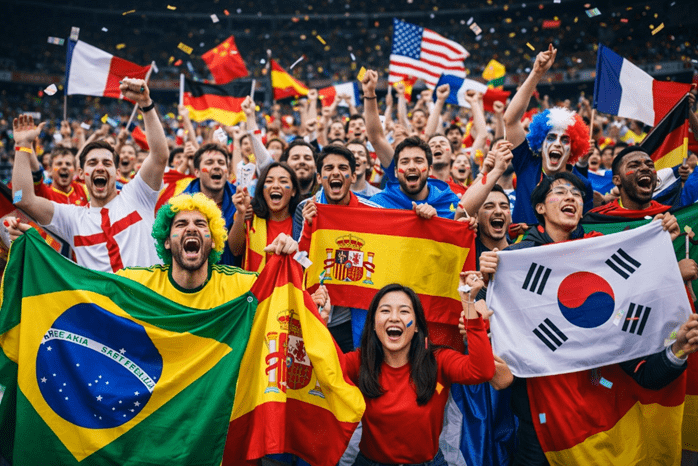
Sports translation in the World Cup Sports translation enables international tournaments to become global spectacles, bringing people from different cultures and backgrounds together. For example, at events such as the FIFA World Cup, fans from around the world come together to share their passion for the sport, despite speaking different languages. Sports translation enables audiences around the world to follow the same matches, teams and stories in real time, whether through official broadcasts or social media posts. In this way, sports translation plays a vital role in breaking down cultural and linguistic barriers, turning soccer into a truly global experience. The global reach of soccer Sports translation is essential for expanding the global reach of soccer. International tournaments attract viewers from all over the world, creating a high demand for multilingual media content. As a result, international soccer events become more accessible, thus reinforcing the sport’s position as one of the most globalized. Cultural differences in language and sports translation The translation of sports terminology is complex and dynamic because sports terms are described differently across languages. Distinct expressions, tones and styles are used when discussing sport, reflecting supporters’ unique understanding of and experience of soccer. The same applies in stadiums, where supporters have unique songs and chants during matches that are difficult to translate convey into other languages. For this reason, sports translation often requires adaptation rather than direct translation. In the context of English football, for instance, if a team has not conceded a goal to the opposing team, the term “clean sheet” is used. Notably, British English speakers do not use the standard English term ‘zero’,...
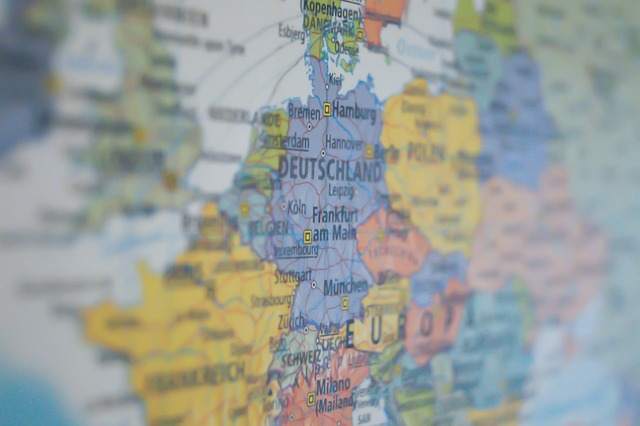
German dialects influence everyday life When people think of German dialects, they often picture a single, uniform way of speaking. In reality, however, Germany is linguistically rich and diverse. Countless dialects give each region of the country its own distinct sound, rhythm, and vocabulary. From daily conversations to cultural traditions, German dialects influence almost every aspect of life. Whether you’re strolling through a Bavarian village, exploring Cologne, or enjoying the northern coastline, you’ll notice linguistic variations that reflect centuries of history, migration, and local pride. Why are German dialects so diverse? Germany is home to a remarkable variety of dialects. In fact, the differences can be so significant that someone from one region might struggle to fully understand a person from another. These differences aren’t just accents – they often involve unique vocabulary, grammar, and pronunciation that distinguish each region. Traditionally, linguists divide German dialects into Low German and High German. High German is then further subdivided based on geography and historical sound shifts: Low German (Plattdeutsch): Spoken in northern Germany (Lower Saxony, Schleswig-Holstein and parts of Mecklenburg-Vorpommern), it features clear, open sounds and is closer to English and Dutch than Standard German. For example, the verb maken (“to make”) resembles the English more than the Standard German machen. High German: Spoken in the central and southern regions, High German is divided into Central German and Upper German.Central German: Found in Hesse, Thuringia, Saxony, and parts of the Rhineland, these dialects blend northern and southern traits. In Cologne, for example, people say Wat instead of Was (“what”), while in Hesse, certain word endings may be dropped altogether. Upper German:...
Translation companies: Partners for your multilingual business Language company services are a cornerstone of successful global interactions, providing the necessary support to overcome language barriers. In today’s multicultural environment, communicating clearly and effectively with diverse audiences is essential for business growth. Quality translation services ensure companies can share their vision and values, facilitating stronger connections in international markets. With the right translation company, businesses can effortlessly navigate the complexities of multilingual communication. Which translation companies are right for your business? Choosing the right translation company is crucial for any business looking to expand globally. When evaluating translation companies, consider their expertise, range of services, and client reviews. A reputable translation company should offer not only basic document translation but also specialized options such as certified translation, marketing translation, software translation, technical and legal translation, and voice-over services to ensure that the nuances of your specific content are preserved. At LingoStar, we specialize in the IT and business sectors and deliver tailored solutions that meet your needs. Additionally, you can check our client reviews and testimonials to see the reliability and quality of our services. Our professional translators ensure that your message resonates with your target audience, taking into account both linguistic accuracy and cultural adaptation. Translation companies’ quality assurance Quality assurance is essential for any reputable translation company. At LingoStar, we implement rigorous processes and professional standards to ensure the accuracy and consistency of our translations. Our quality assurance includes multiple rounds of editing and proofreading, ensuring that your content is not only translated, but also polished to perfection. This commitment to quality helps us build long-term partnerships with our clients, ensuring they receive exceptional service every time. Long-term partnership...
Interpreting services for all your needs Interpreting services are needed in various social situations to facilitate effective communication between different parties who do not share the same language. Some of the most common interpreting modes are consecutive interpreting, simultaneous interpreting, whispered interpreting, also known as chuchotage, and sight translation. In this article, we introduce you to the main mode of interpreting for which we offer interpreting services: consecutive interpreting. What is consecutive interpreting? Unlike simultaneous interpreting, where the interpreter interprets the speaker’s words into the audience’s language within a few seconds, consecutive interpreting takes place after the speaker has finished speaking. While the speaker is speaking, the interpreter takes notes in order to produce an accurate summary of the speech in the other language. Simultaneous interpreting is best suited for meetings where there is one keynote speaker, while consecutive interpreting is more suitable for meetings with several speakers where there will be back-and-forth communication. At LingoStar, we have extensive experience in interpreting projects, especially consecutive interpreting. We regularly work with professional consecutive interpreters on projects in a variety of fields, usually public or social services, including business meetings, legal proceedings, and medical appointments. What to look for in a consecutive interpreter What does it take to become a consecutive interpreter? Can anyone do it, or does it require special training and skills? A professional interpreter needs to practise a number of skills on a regular basis in order to deliver a coherent and structured speech that conveys the same information as the original speech, with the same tone, register, and intonation. Every consecutive interpreter must be proficient in note-taking....