Arabic dubbing from 1999 to 2012: The MBC hit
With the expansion of its media and the popularity of its music and cinema, the Middle East and North African region experienced a new evolution in this field with the introduction of Arabic dubbing of various South American soap operas in the late ’80s and early ’90s. The dubbing was a massive success, leading to the expansion of this audiovisual translation method and its use instead of subtitling.
This movement forever changed how generations of viewers connected with foreign media. It also allowed localized television tracks to evolve from simple text translations into a core part of regional pop culture identity. As satellite dishes spread across rooftops, audiovisual media stepped in to bridge cross-border divides. Families gathered to watch the same programs, which became cultural landmarks. Young children and teenagers became accustomed to this media, which reshaped the presentation of drama. These audio choices greatly influenced the public.
How the Arabic dubbing of Turkish soap operas reshaped regional identity and language
The founding of the MBC Groupe, which is the short acronym of Middle East Broadcasting Centre in 1991 marked a shift in Arabic primetime TV. The Saudi-owned studio aired two Turkish series: Noor (Gümüş) and Sanawat Al-Dayaa’ (English: The Lost Years) (Ihlamurlar Altinda). The MBC Group took the creative initiative to dub these shows in Syrian Arabic, also known as the Shami dialect.
The result of this initiative was unexpected. The soft cadence of the Levantine dialect felt intimate, and more relatable to the average Arab household. Yet, its phonetic clarity made it easily comprehensible across different sub-regions. The finale of Noor attracted a record-breaking audience of over 85 million people across the MENA region. This cultural phenomenon quickly changed behaviours: Turkish tourism soared and baby-naming trends shifted towards local characters like “Muhannad” and “Yahya”. The professional status of Syrian theatre actors elevated them to regional superstars. Posters of “Muhannad” and “Yahya” filled the rooms of teenage girls, while posters of “Lamis” and “Noor” filled the rooms of boys.
The use of the Shami dialect allowed North African countries to communicate more easily and be more open to different cultures. It also made it easier to learn their dialects. Dubbed shows made communication easier and improved understanding of cultural nuances in the MENA region.
Modern standard Arabic dubbing: How Spacetoon dominated MENA childhood
Spacetoon launched in 2000, branding itself as “the Global Station for Third-Millennium Children.” The channel’s programming was organized into ten thematic “planets,” which became a staple in the after-school routines of millions. Spacetoon’s success can be attributed to its unwavering commitment to Modern Standard Arabic (MSA).
The focus on MSA offered significant educational advantages in a region where local dialects vary greatly. Previously, classical Arabic was only accessible through formal education and news broadcasts. Spacetoon collaborated with the Damascus-based Venus Centre to make MSA more enjoyable for young viewers by delivering high-quality performances through beloved characters. This approach taught an entire generation of millennials and Gen Z the nuances of classical grammar, syntax and vocabulary outside the classroom.
Arabic dubbing and localization: Between censorship and script alterations
The golden era was made possible by screenwriters, directors and adapters who worked at the Venus Centre. Importing complex Japanese anime frequently clashed with Arab and Islamic values. Instead of rejecting these titles, the studio adapted the storylines to align them with societal expectations.
Original animation element | Arabic dubbed adaptation | Strategical cultural purpose |
| Alcohol consumption/ Saké | “Juice”, “Water” or “Medicine” | Upholds regional values while preserving scenes |
| Romantic subplots | “Deep cousinly affection” or “Fiancé dynamics” | Maintains family-friendly comfort for all ages. |
| Complex foreign names | Localized names (e.g. Captain Tsubasa to Captain Majed” | Ensures high memorability and ease of pronunciation |
The adaptations extended beyond dialogue edits. Visual designers removed mature elements, and composers such as Rasha Rizk and Tarek Alarabi Tourgane created original orchestral theme songs. These opening themes explored philosophical concepts, such as honour, perseverance, science and filial piety.
From Egyptian dubbing to MSA: The 2012 Disney paradigm shift
Masterpieces such as The Lion King, Aladdin and Toy Story were voiced in a vibrant and highly musical Egyptian Arabic, utilizing the talents of legendary comedic actors such as Mohamed Henedi. These versions became legendary thanks to classic Western animation physics and Egyptian street slang. However, in 2012, Disney’s corporate executives reversed their decision, stipulating that all future content must be recorded in formal Modern Standard Arabic (MSA).
The sudden change hit the regional audience hard. Although they welcomed the formal language structures, fans felt a loss of cultural authenticity. Critics argued that MSA lacked the nuances of local dialect.
Conclusion: The timeless soundtracks of a generation
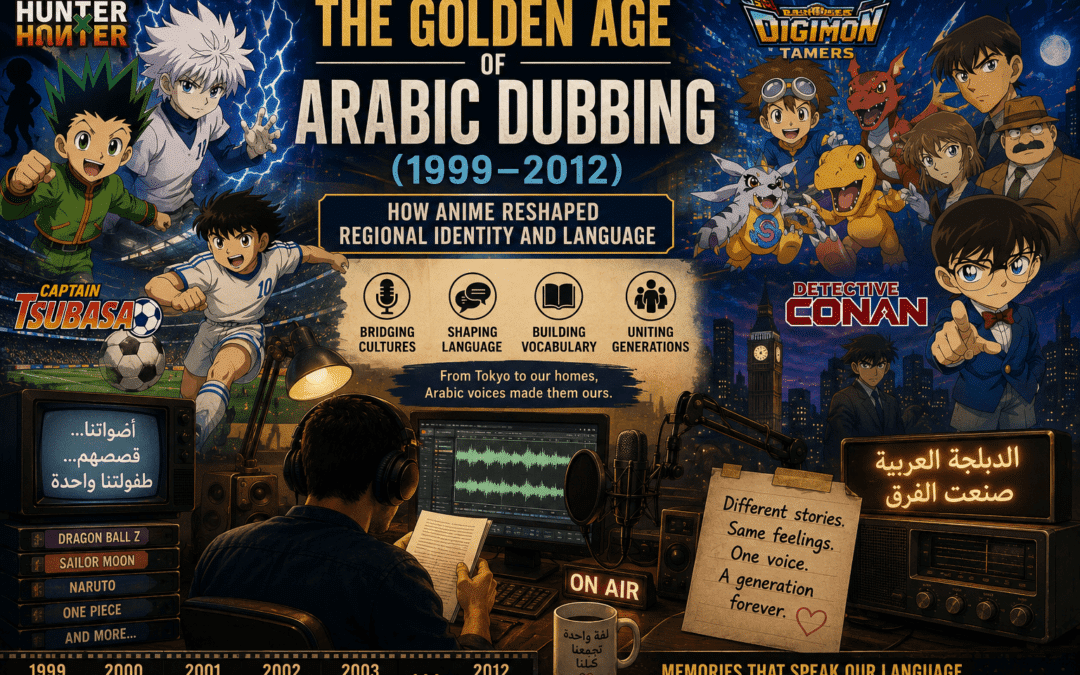
From 1999 to 2012, the golden era of Arab media saw studios balance children’s classical language and adult regional dialects to create cultural touchstones. The era’s unforgettable shows and sounds evoke nostalgia for an entire generation. From Detective Conan recitations to early primetime cliffhangers, these audio memories have shaped the modern Middle Eastern consciousness.
Do you have a marketing campaign, slogan or story that needs to travel across the Arabian Nights while preserving its original values? Our team of professional Arabic translators and voice actors ensure that no sand dunes will ever get in your way 😎. We also offer a voice-over service, which you can learn more about on our Voice-over Services page.
Do you have a project in mind? Email us at info@lingo-star.com to request a free quote – we’re here to help!
You can also download our free ebook, An Introduction Guide to Multilingual Website Translation for more translation tips!

Do you love translation and dubbing? Follow us on Instagram, Facebook, X, YouTube and LinkedIn for the latest updates.
Explore more articles on our blog and subscribe to our newsletter to join the LingoStar community!