Translation Services Canada – Welcome to LingoStar
Established in 2004, LingoStar Language Services is a versatile and resourceful language services company dedicated to excellence in quality and customer service. We provide cultural and industry-appropriate language solutions tailored to your specific needs. Ready to go global? Do you want to reach multilingual communities?
Read more about LingoStar’s translations…
Explore Website Translation & Localization | LingoStar
Interested in website translations? Go global with your multilingual site!
Read more about multilingual websites…
Download our FREE eBook or Read more about LingoStar website translation guide…
Website Translation Free E-book
TRANSLATION
LingoStar provides translation of all types of written documents of any kind of complexity. Whether it is a personal document, a complex medical report, a technical manual, or a patent of a new design – we are here to help you.
INTERPRETATION
Are you looking for the right person to interpret spoken texts in a conference, provide training, or translate verbal negotiations? LingoStar Language Services can help you find a professional interpreter that will fit your exact needs. Reach out to multilingual communities with our interpreters.
VOICE-OVER
All of your audio and media files need to be localized if you want to attract your target audience. Voice-over translation is perfect for this purpose. With LingoStar you can find the perfect voice-over artist to help your business reach your target market.
WEBSITE TRANSLATION
Do you want to establish credibility with international customers? We can provide website translation to French, Spanish, Chinese, Russian, and many other languages to help your customers understand and use your services or products.

GO CANADIAN. GO BILINGUAL.
We are a Canadian company and specialize in English to French translation.
Need translation from Canadian French into English or English into Canadian French?
EMPLOYMENT OPPORTUNITIES
LingoStar is looking for reliable freelance translators, interpreters, proofreaders, desktop publishers, voice-over artists, transcribers, tutors, tour guides and other language professionals who will work with us to deliver high quality services within set deadlines.
MOST RECENT BLOG ARTICLES
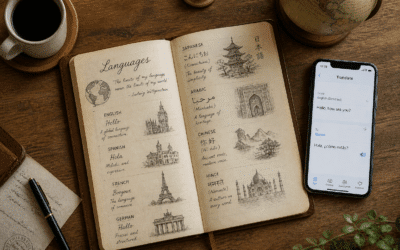
Linguistic Diversity: Why Emotions Escape English Translation
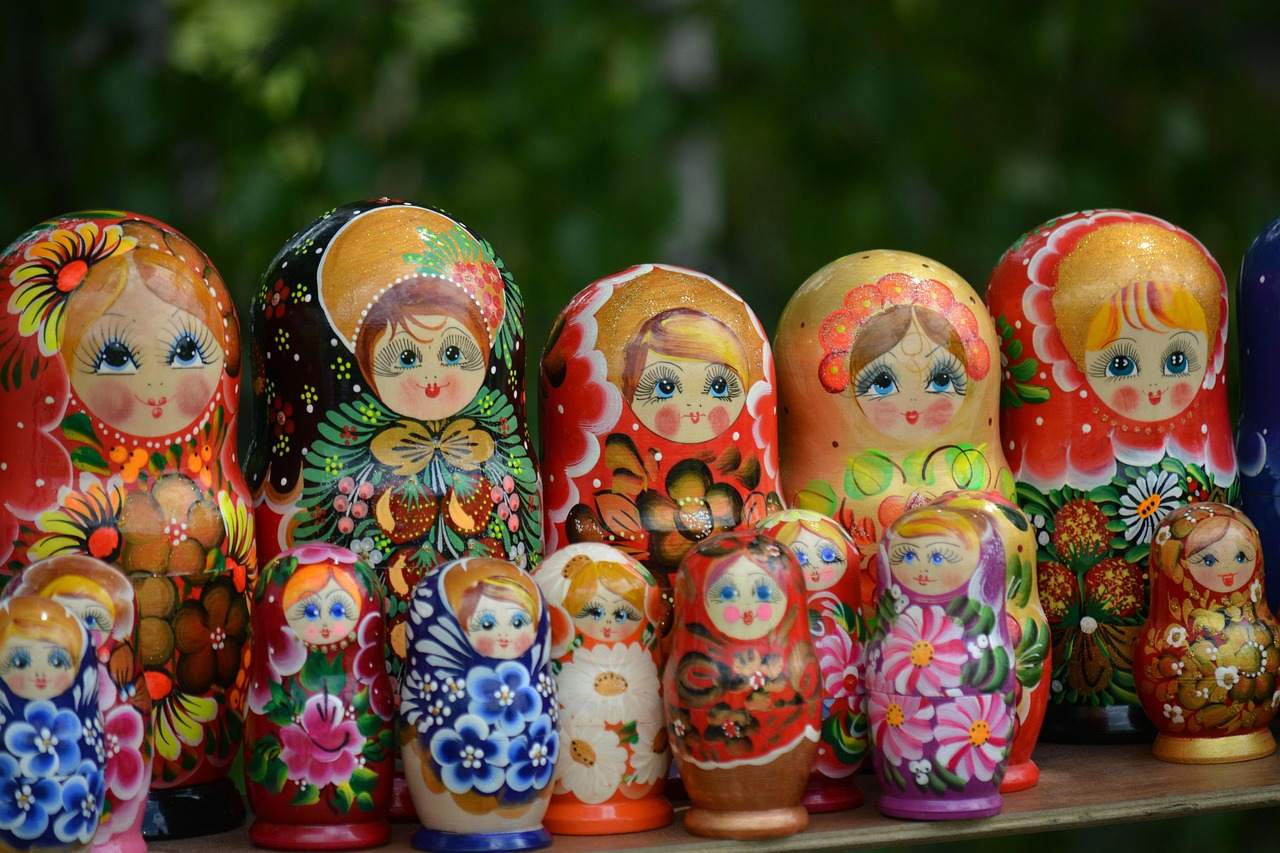
Why linguistic diversity is the heart of meaningful communication Linguistic diversity encompasses much more than just different vocabularies. It reminds us that, while we all feel the same fundamental emotions, the words we use to describe them can vary greatly from one part of the world to another.Although we often think of translation as a simple exchange of words, it is actually an important form of cultural preservation.Consider, the Russian word toska, for example. Translators often render it as “melancholy” or “longing”, but neither of these words truly captures its essence. Toska is a deep, spiritual ache, a pain with no specific cause, a yearning for something that may not exist. Then there’s the Portuguese word saudade: a profound, melancholic longing for a place, person or feeling that may never return. English speakers need entire sentences to express what other languages capture in a single, untranslatable word.This is a beautiful reminder that linguistic diversity gives each culture a unique emotional lens. Examples of linguistic diversity in action There are many words around the world that carry entire philosophies and concepts which cannot be boxed into an English equivalent. Here are some of these untranslatable gems that embody unique emotional worlds: Hiraeth (Welsh): Nostalgia for a home or place you cannot return to or that never existed. Meraki (Greek): Doing something with complete soul, love or creativity. Komorebi (Japanese): Sunlight filtering through tree leaves. A single noun for a poetic visual moment. Apapachar (Spanish): To give a big hug with the soul, not just the arms. Gezellig (Dutch): The warmth of being with loved ones; that cozy and deeply comforting... read more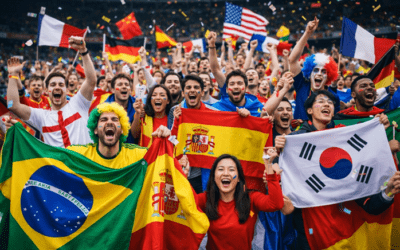
Sports Translation: Bridging Cultures Through Languages
Sports translation in the World Cup Sports translation enables international tournaments to become global spectacles, bringing people from different cultures and backgrounds together. For example, at events such as the FIFA World Cup, fans from around the world come together to share their passion for the sport, despite speaking different languages. Sports translation enables audiences around the world to follow the same matches, teams and stories in real time, whether through official broadcasts or social media posts. In this way, sports translation plays a vital role in breaking down cultural and linguistic barriers, turning soccer into a truly global experience. The global reach of soccer Sports translation is essential for expanding the global reach of soccer. International tournaments attract viewers from all over the world, creating a high demand for multilingual media content. As a result, international soccer events become more accessible, thus reinforcing the sport’s position as one of the most globalized. Cultural differences in language and sports translation The translation of sports terminology is complex and dynamic because sports terms are described differently across languages. Distinct expressions, tones and styles are used when discussing sport, reflecting supporters’ unique understanding of and experience of soccer. The same applies in stadiums, where supporters have unique songs and chants during matches that are difficult to translate convey into other languages. For this reason, sports translation often requires adaptation rather than direct translation. In the context of English football, for instance, if a team has not conceded a goal to the opposing team, the term “clean sheet” is used. Notably, British English speakers do not use the standard English term ‘zero’,... read more
Lyrics Translation: How Multilingual Artists Reach Global Audiences
Lyrics translation in global music With music reaching international audiences through digital platforms, lyrics translation has become increasingly important. Today, many artists incorporate multiple languages into their songs, enabling them to connect with listeners from different cultures and regions. However, when fans do not understand the original language, translating the lyrics becomes essential for fully appreciating the meaning behind the music.Artists such as Shakira and the South Korean group BTS are well-known examples of multilingual performers with global audiences. Their songs often combine several languages, cultural references, that reflect their backgrounds. Lyrics translation helps international fans understand the stories, emotions, and cultural elements embedded in the music. The role of lyrics translation for multilingual artists For multilingual artists, translating their lyrics is crucial role for expanding their reach. When songs are sung in more than one language, some listeners may only understand part of the message. Translating the lyrics enables fans from different countries to understand the full narrative of the song, allowing them to build a stronger connection with the artist’s work.For example, the Spanish singer Rosalía incorporates a wide range of linguistic and cultural influences in her music. Her latest album features elements from multiple languages, including Spanish, Catalan, English, Portuguese, French, Arabic, Mandarin, German, Hebrew, and Japanese. These linguistic choices help shape the artistic message of her songs.Similarly, BTS frequently blend Korean and English in their lyrics, making their music accessible to both local and international audiences. Other global artists, such as Bad Bunny and Shakira, also incorporate multiple languages into their music to reach wider audiences.In these cases, lyrics translation enables listeners to understand how... read more


























































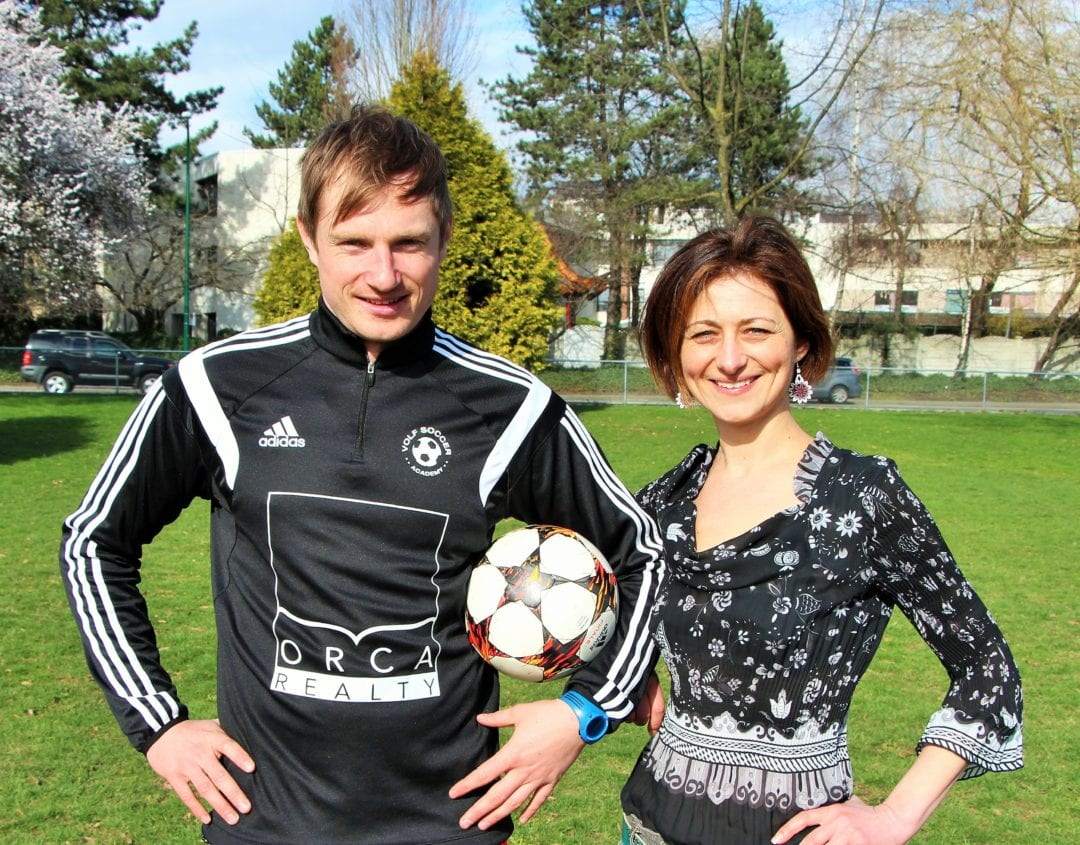
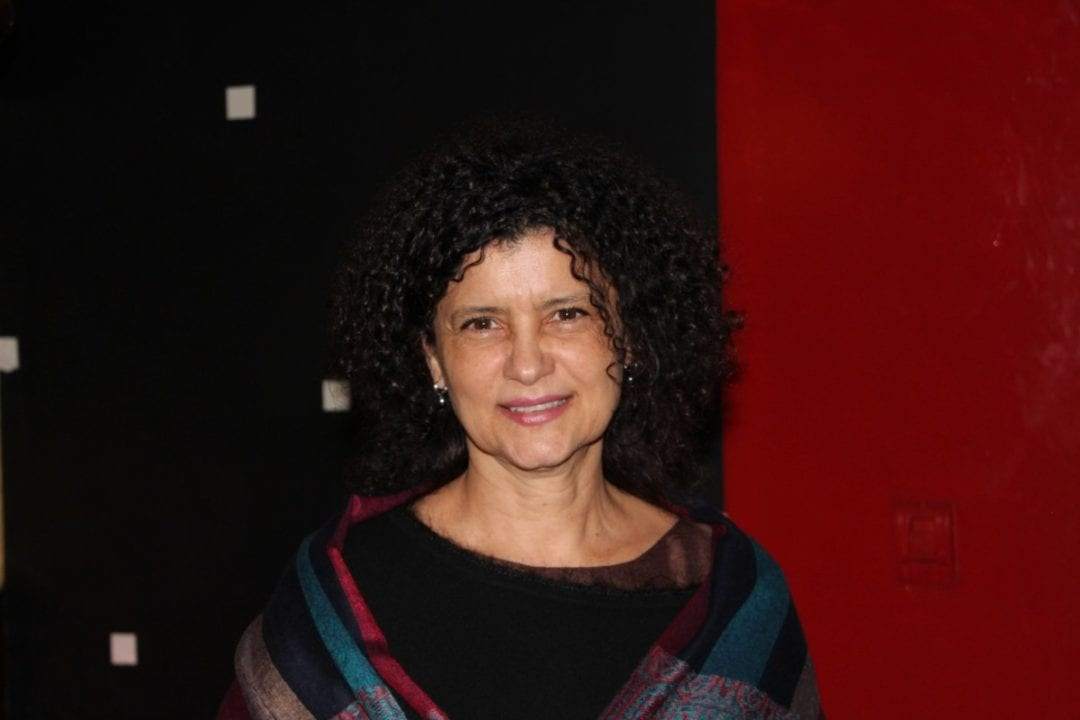




LingoStar Translation Agency has launched a new series of interviews and stories about interesting people and artists who recount their life experiences to us. We are happy to know that there are so many talented, extraordinary people and that we have a chance to share these stories with you!
If you have a story to share with us, it can be featured here too!
Showcase your art & skills by providing us with an interview.
Do you love languages and different cultures? Tell us your life story!
Has translation helped your company thrive? Be our case study!
Working with LingoStar on many multilingual projects for both translation and voice-over is a real pleasure. Their work is extremely well-managed and the attention to detail – a must in the translation field – is outstanding. Thank you, LingoStar!
Gemma ScottLingoStar consistently delivers on time and in the format that best suits the needs of our business. We often need last-minute translations, and LingoStar’s highly professional team of translators has never disappointed.
Sina Noureddin
MOST TRANSLATED LANGUAGE PAIRS IN OUR OFFICES:
Vancouver
%
English to Chinese Translation
Toronto
%
English to French Translation
USA
%
English to Spanish Translation
