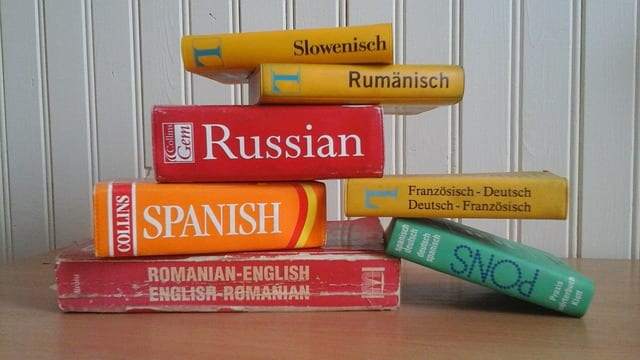
A Translator’s Tale Once Upon a Time… …there were translators. But they were translation students or amateur translators. We’re sure you’re familiar with that feeling of not being good enough and fearing that you won’t find work. Many of us are told during our studies that the world of translation is difficult and cold. Some professors even say that we’d be better off becoming language teachers or finding other work because it is impossible to make ends meet working as a translators. This mix of pessimism and closing doors makes amateur translators feel lost and helpless. However, opportunities exist and once you find one, you will discover that the world of translation is very rewarding. You will find wonderful colleagues who will share your interests. You’ll realize how cool it is to always keep learning through the texts you translate. This is something they don’t teach you during your translation degree. Decisions of Translators The biggest, scariest question for amateur translators or for translators who just finished a degree (or master’s degree) is “so what now?” Let’s walk in an amateur translator’s shoes for a moment. You finish your degree knowing that there are much more experienced translators than you in the labour market. Two things can happen at this point: you are determined to thrive as a professional translator from the very beginning, or you keep studying to gain more experience. Many translation students decide to complete a master’s degree, which gives them one or two more (safe) years to make up their minds on what they want to do in the future. Nonetheless, the master’s degree comes...
Popular places in the world on Instagram Summer is here and it’s time for you to book your holidays. If you want to make your followers jealous, here are the 10 most popular places in the world on Instagram. Let’s be honest, when we are on holidays we try to take our best photos to send it to family, friends and colleagues and show them how lucky we are to be travelling. Even if you are not a real photographer, taking a good photo in any of these beautiful places would be easy! Are you ready to hit “like”? Disneyland, California, United States Disneyland, California, United States This is the classic dream spot where everyone including children and adults should go at least once. It’s no surprise that Mickey wins first place! Eiffel Tower, Paris, France Eiffel Tower, Paris, France The quintessential romantic place. Paris and the beautiful Lady Eiffel are a dream come true! Walt Disney World, Orlando, United States Walt Disney World, Orlando, United States Another Walt Disney Park in the top three. The house of Mickey is definitely the place to go! South Beach, Miami, United States South Beach, Miami, United States Nicknamed SoBe, South Beach is a trendy destination that mixes beach, party and art deco. Berlin Wall, Berlin, Germany Berlin Wall, Berlin, Germany This is a very emotional place. The Berlin Wall was built to separate East and West during the WW2 and was destroyed in 1980. Las Vegas Strip, Las Vegas, United States Las Vegas Strip, Las Vegas, United States Look at all those lights! The Vegas Strip is home to the craziest...
What Is Canada Day? Happy Birthday Canada! Happy birthday Canada! Did you know that Canada is 150 years old this year? Want to celebrate this huge event? Let’s learn about this nation and how to celebrate Canada Day! 150 Years for Canada To start, a little bit of history. If you are a proud Canadian you can skip this part as you probably already know your fabulous country’s story, but for those of you who are curious, here are some interesting facts that will help you understand why Canada Day is so important! If you think that 150 years is very young for a country then you are right! Of course, in reality, the country is much older. For thousands of years prior to European colonization, indigenous peoples inhabited what is now known as Canada. Beginning in the 16th century, British and French claims were made on the area, with the colony of Canada first being established by the French in 1535 during Jacques Cartier’s second voyage to New France. Due to various conflicts, Great Britain gained and lost territories within British North America until the late 18th century when it was left with what comprises Canada’s today geographically. On July 1, 1867 occurred the unification of Canada giving birth to the Canada we all know today. Since this date, Canada Day is the national day of celebration. A federal statutory holiday, Canadians celebrate the anniversary of the July 1, 1867 enactment of the Constitution which united three separate colonies, Nova Scotia, and New Brunswick into a single Dominion within the British Empire called Canada. Originally called Dominion Day, the...
Cannes Film Festival The Cannes Film Festival is a yearly event which showcases new films and documentaries from all over the world. It is celebrated in Cannes, France, and is attended by international producers, actors, actresses and stars. This year was the 70th anniversary celebration. The festival has had a big impact not only in the film industry, but also in other areas like the media and translation industries. The place where all stories meet The Cannes Film Festival represents an opportunity for filmmakers from all over the world to meet in one place and to exchange their cultures and experiences. The festival is a window to the world, it gives the opportunity to filmmakers to showcase their country’s customs and traditions on a big screen watched by a wide audience. One of the most important aspects of the festival is the principle of equality, not that we are all the same, but that even with our differences in culture, history and language, we are all equal members of the world community. Cannes Film Festival provides an opportunity for all countries to establish their own cinema and in turn, celebrate the culture and history of their respective countries. Two industries join hands For the translation industry, films and documentaries represent a huge field of work and an interesting part of the job. The Cannes Film Festival provides amazing opportunities in translation, subtitling, and dubbing into a full range of languages. It is a win-win situation in that both translators and filmmakers benefit and profit from this activity. If a film is available in a large range of languages, it has...
A Cock Story Learning a new language is always a challenge, especially when words can mean two completely different things. Here is a “cock” story by one of our Russian translators about an experience he had while learning English in college. My lifelong passion for languages began in the Soviet high school, where I was, according to my English teacher, the best student in her three-year experience. That didn’t necessarily mean I could string two words together by myself, but I would diligently do my homework and vigorously raise my hand during her classes. Little did she know that my linguistic zeal was driven, more than anything, by my being innocently mesmerized with her inner and outer beauty. More with the latter than the former. The Learning Two years on, in the summer of 1991, the Soviet Union broke apart, and I was now a college freshman in the newly independent Uzbekistan. I was studying to be a translator/interpreter between English, Russian and Uzbek. Those were not the easiest times to study a foreign language: information and materials were scarce, there was no access to communication with native speakers and, of course, no such thing as the Internet. My faculty had a modest library where you could find most classic novels and a very limited number of audio recordings spoken by BBC newscasters and such. Needless to say, there was no taking them home, so I would spend endless hours in the library practicing my listening and comprehension. One thing I had no way of knowing at the time was the fact that my decades-old textbooks and dictionaries presented...
What are the advantages of bilingualism? “Bilingualism is the ability to speak or write fluently in two languages.” – The Canadian Encyclopedia In Canada, being bilingual is more common than in other countries due to its two official languages: French and English. Canadian instructions on food packaging at the supermarket, and signs around the city, are generally written in both languages. However, speaking, writing, thinking or dreaming in more than one language could also be enhanced thanks to the brain’s constant activity. So what are the real advantages of being bilingual? Boosts cognitive performance Many scientists who study linguistic development talk about “the bilingual advantage”. When a bilingual person has to solve a conflict, he/she will think in two languages. This flexes the cognitive muscles. This in turn improves the working memory and one’s ability to switch attention from one thing to another. Multi-tasking The most specialized scientist in bilingualism is Dr. Ellen Bialystok, Rotman Research Institute Associate Scientist, Professor of Psychology at Toronto’s York University, and Officer of the Order of Canada since 2016. Her research shows that bilinguals are better than monolinguals at tasks that require controlling several goals in mind at once. Multi-tasking and avoiding distraction during tasks are such examples. Read more about Dr. Bialystok’s research here. Improves linguistic skills When you are already bilingual, it’s easier to become multilingual. Your brain already knows how to learn new words and switch quickly between different languages. Scientists have proven that bilinguals have better listening and communication skills than monolinguals. Protects against Alzheimer’s disease Between 2008 and 2010, Dr. Ellen Bialystok wrote a research paper on “the...
Birthday Song Have you ever wondered how your birthday would be celebrated in other countries? What birthday song would be sang? For example, which song do you sing if you are in a Spanish-speaking country? Well, each Spanish-speaking country has a different birthday song. The birthday celebration itself is more or less the same everywhere: gifts, party, food, and of course, a birthday cake! And along with a birthday cake there is always a birthday song and candles! The Song The song is important and represents the main purpose of the party: to celebrate the birthday boy or girl. Even though customs in Spanish-speaking countries are pretty similar, the song will vary. Replacing the “Happy Birthday To You” song characteristic of Anglo-Saxon countries, the Spanish countries range from “Las Mañanitas” in Spain and Mexico to a 10-minute song in Venezuela, and each song carries unique cultural differences. Most of the songs are full of good wishes and blessings, and the way they are sung also reflects the country’s culture and customs. For example, in Mexico the guests sing “Las Mañanitas” and then the birthday boy or girl bites the cake and pushes his or her face into the cake as a joke. In Venezuela, guests sing “Ay que noche tan preciosa”, which can last for up to 10 minutes because people say funny things and they repeat parts several times to make fun of the birthday boy or girl. In Paraguay, the guests slap the back of the birthday boy or girl with their hands at the end of the song. Whereas in Chile, the birthday boy or girl...
Accents in the UK Are you from a non-English-speaking country and want to move to the United Kingdom? If you are and you have decided to go, you need to be aware of all the different British accents. Check out our article about how you can recognize British accents and get familiar with the different dialects and accents in the UK. English as a second language I am from Spain and in my country, when we are in school, we learn English as a second language. The English we learn is the general English (Received Pronunciation English) and many of us believe that this type of accent is the only one that exists in the UK. Then when we move to the UK for work or study, we realize that we were wrong. Depending on where you go, people speak with many different English accents. Check out our English voiceover services. We work with voiceover artists who record native British, American and Canadian accents. In the south, you will find the Received Pronunciation English, Cockney, estuary English and West Country. Further out, you find the Midlands English and Welsh English. And in the north, you will find the Northern England English, Geordie accent and Scottish English accent. Received Pronunciation English Currently I am living in the north, in Leeds to be precise, and I would like to point out the differences between the Northern English and the Received Pronunciation English. The Northern England English is spoken in the area of Manchester, Leeds, York and Liverpool. The features of this accent are: Non-rhoticity, except in some rural areas. The diphthong in words...
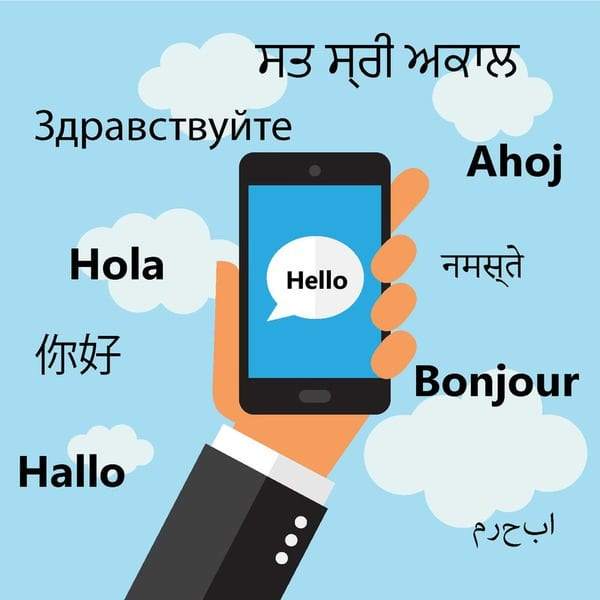
The Best Translation Apps For Travelers While travelling, understanding people, directions, signs or restaurant menus is not easy if you do not really speak the local language. To obtain quick help in these cases we often use translation apps on our smartphones. Here are the best translation apps selected by LingoStar to ensure you easy travel. Google Translate With over 90 languages in its database, Google Translate is the translation app from the Californian giant Google. The app gives you several ways to enter a word or a phrase: typing, drawing with your finger, speaking through the microphone, or using your camera to take a photo of what you want to translate. The app is free and can be downloaded on Android and iOS; you can also use the browser version on your computer. Here for iOS download Here for Android download Pros: You can easily switch between languages Ability to use your camera for translations History of your translations Cons: Can be inaccurate with long texts or phrases Some languages are not very accurate iTranslate iTranslate is one of the easiest-to-use translation apps on the market due to the simplicity of its interface. Like Google Translate, the app has over 90 languages in its database and you can type or speak to get your translation. In its premium version ($5) you can type in long texts, use voice commands, and get rid of ads. A plus is that you can share your translation with somebody else via text message or social media. The app is available on Android and iOS in free and premium versions. Here for iOS...
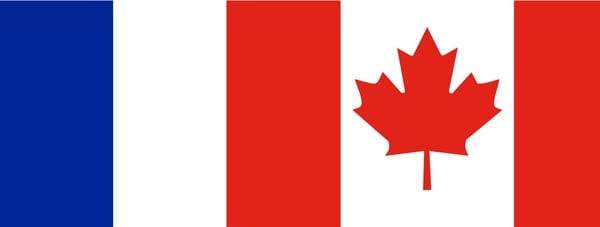
Canada and France: are there many differences? We love to discover new cultures around the world. Here are a few cultural differences between France and Canada about the language they speak, the food they like and the sport they play or watch. Differences in Languages The two main languages spoken in Canada are English and Canadian French. English is by far the most spoken language in Canada with 58% of Canadians speaking English and only 22% speaking French. Canadian French is a variation of the French language from France, originating from the 18th century. In France, French is the official language and many people know some English but less are fluent. Differences in Food Canada has a large variety of dishes from East to West. Most of them are based on meat, cheese, and potatoes. First of all, poutine is one of the most famous dishes in Canada and especially in Quebec. It is a delicious meal made with French fries, gravy and cheese curds. In addition, British Columbia salmon, and Alberta beef and bacon are also very much appreciated in Canada. Coincidentally, meat, cheese and potatoes are also much appreciated in French cuisine. For example, Raclette and Tartiflette are typical French dishes composed of potatoes, bacon and cheese. On the sweet side, Canada is famous for its maple syrup and beavertails. Nevertheless, in France, pastries and bakery goods are also very typical with the classic baguette, croissant and pain au chocolat. Differences in Sport The national sport in Canada is ice hockey. However, most American sports, like football and basketball, are also represented in Canada. The National Hockey...