Introduction to Translating Challenges with Japanese
The translation of Japanese is widely regarded as one of the most complex translation challenges in the world. With its multiple writing systems, high-context communication style and deep cultural nuances, Japanese requires far more than simple word-for-word conversion. Whether you are translating business content, websites, manga or audiovisual material, professional Japanese translation services are essential to preserve meaning, tone and intent.
In this article, we explore the main linguistic and cultural challenges of Japanese translation, with a special focus on manga translation and professional language services for the Japanese market.
Challenges with Japanese translation
The Japanese writing system originates partly from China and is unique in that the use of different scripts depends on the grammatical function, convention, and stylistic intent translation of the text. Therefore, for an accurate translation, it is fundamental to understand how these scripts interact.
Japanese writing systems explained
Interestingly, modern Japanese primarily uses three scripts—Kanji, Hiragana, and Katakana—while Romaji exists for occasional transcription and stylistic purposes.
- Kanji was introduced to Japan from China in the early centuries AD through trade and diplomacy, and, later, through Buddhist texts. Each Kanji has a meaning, while its pronunciation was historically influenced by Chinese before being later adapted into Japanese. For example, the character 山 means “mountain” in both Chinese and Japanese, though it is pronounced differently.
- Hiragana and Katakana were developed around 800 AD and represent syllables rather than meanings.
- Hiragana is typically the first script Japanese children learn. It makes up the grammatical elements such as particles and verb or adjective endings.
- Katakana is commonly in foreign words, loanwords and technical terms, as well as for stylistic or artistic emphasis.
- Romaji refers to the Latin alphabet and transcribes Japanese sounds. Alternatively, it is there to be stylistic.
Japanese sentences do not use spacing between words. Instead, the combination of scripts signals meaning and structure, helping readers identify where words begin and end.
High-context language and meaning
Japanese is a high-context language, meaning that much of the message depends on shared context rather than the explicit wording. As a result, words that sound the same can have entirely different meanings depending on the context, which makes translating Japanese especially challenging without a strong awareness of the culture and context.
Also, phonetics present another difficulty. Overall, some sounds are different in some way in Japanese and English, which affects how names and terms adapt across languages. A well-known example is the anime character called “Luffy” in English, whose name is “Ruffy” in German. This reflects the ways Japanese sounds adapt differently in each target language.
For a deeper explanation of these challenges, you can watch this video:
https://www.youtube.com/watch?v=WlPZZI_uLII
Translation of Japanese comics (manga)
The translation of Japanese manga presents its own set of challenges. One of the earliest manga translated into English was Hadashi no Gen (Barefoot Gen) by Keiji Nakazawa, released in English in 1978. Although it was originally intended for a younger audience in Japan, Western readers often perceived it as adult content due to its graphic imagery and emotional intensity. This difference in reception was partly due to the fact that the Hiroshima bombing was not as much a part of the Western collective memory.
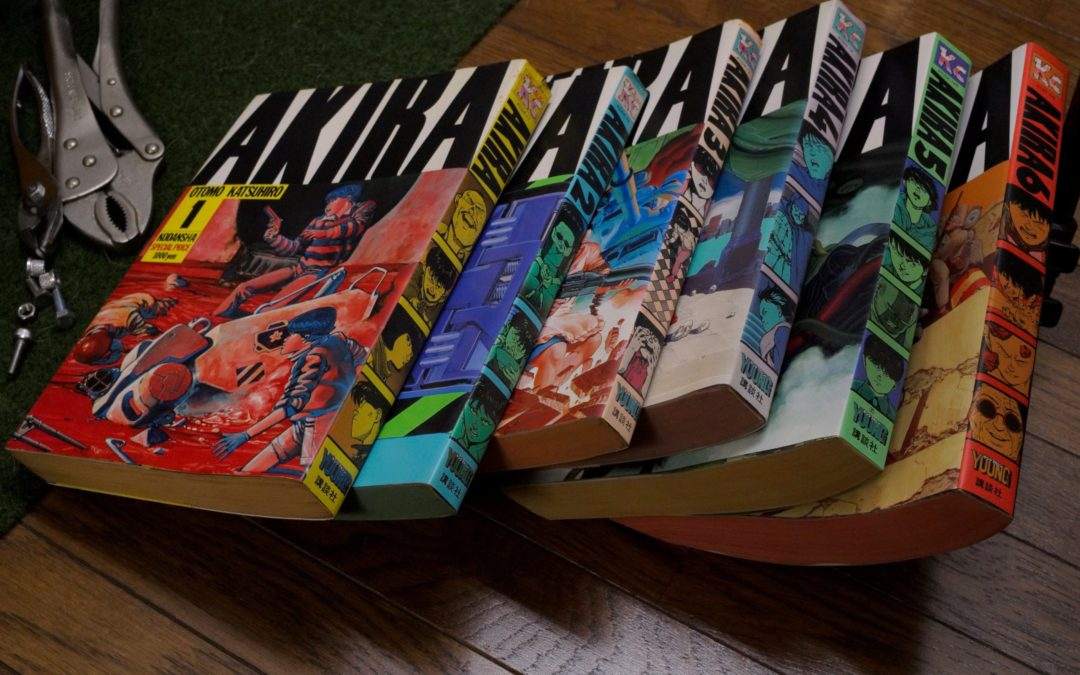
A more successful example is Akira (1982–1990). Its futuristic setting, and biker gangs, as well as its partial inspiration from Western comics made it more accessible to international audiences.
Why Manga translation is so complex
- Manga is traditionally read from right to left. This raises the question of whether the reading direction should be preserved or adapted for Western audiences.
- Manga fans generally value authenticity, so the original reading direction is often retained.
- Japanese has a high information density, meaning that translators may need to adapt or condense the text in order for it to fit into speech bubbles.
- Manga makes extensive use of onomatopoeia, some of which translators often leave unchanged to preserve its distinctive Japanese style.
- Script choice (Kanji, Katakana, or Hiragana) often conveys emotional or stylistic nuances that can be difficult to replicate in translation.
- Romaji can create a foreign or stylistic effect for Japanese readers—an effect that is lost when everything is written in the Latin alphabet.
In some niche or educational editions, the translated text may be superimposed on the original Japanese script to preserve visual and cultural context.
You can read more about addressing cultural nuances in our previous blog post:
https://lingo-star.com/what-is-localization/?v=4326ce96e26c
Most of the information on manga translation is derived from Comics in Translation (edited by Federico Zanettin), particularly the chapter “Translating Manga” by Heike Jüngst.
LingoStar and Japanese Translation
As you can see, Japanese translation goes far beyond language—it involves culture, social norms and communication styles that differ significantly from those in Western countries.
For this reason at LingoStar Language Services, we provide professional Japanese translation services that suit your specific needs. We ensure linguistic accuracy and cultural relevance.
Our Japanese language services include:
- Translation services from English to Japanese
- Localization services for Japan (websites, apps, and subtitling)
- Japanese voice-over translation and subtitle production
- Interpretation services to and from Japanese
If you would like to learn more about how to localize content for the Japanese market, download our free e-Book on Japanese localization.