Ecolinguistics: How translation is helping fight climate change – August Newsletter Do you know that a language dies out every 14 days? And climate change is not helping. But how can language loss and climate loss be connected? August has been such a hot month with lots of fires and storms taking place in the world because of the planet heating up. But global warming is only one aspect of climate change. Despite the many events about the environment to raise people’s awareness, there is still a lot to do. The main issue is the lack of effective communication about the climate changes we are dealing with. Sometimes, we take the words we use to communicate for granted, but in some situations, choosing our words carefully is crucial. We just need to think about Africa, as you will read in our blog post, where little is being done to fight climate change. Moreover, people don’t speak English, leading to a lack of awareness of environmental issues. Therefore, translation has an essential role in helping people understand the meaning of global warming. In this newsletter, you will also find out about ecolinguistics, a branch of linguistics that explores the relationship between the language of a community and its environment. Furthermore, at LingoStar we celebrate various countries and their cultures each month. In August, we celebrated Argentine and Australian curiosities. READ THIS NEWSLETTER...
Explore the Canadian English Language Variety – January Newsletter 2021 is now well under way and it’s fair to say it’s not exactly the start we would have liked. But we remain positive and we look forward to better days to come.The economic and health conditions remain volatile and uncertain for the time being. But the one thing we know for sure is how important our mental wellbeing is. We will continue to share with you news related not only to our industry and our projects but also how to stay healthy mentally and physically. As we look at how the translation industry is changing, a new year also brings new resolutions. In this newsletter, you will for example learn a lot about the history of the Canadian English language. So it’s time to plan ahead, as we give you a glimpse of what lies ahead and what to look forward to this year.Thank you for your continued support! We look forward to a flourishing partnership with our loyal and new followers, clients and suppliers in 2021! READ THIS NEWSLETTER...
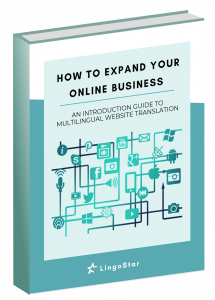
Experiencing Different Languages and Cultures: An interview with Lenka de Graafova, CEO of LingoStar Language Services Vancouver, Canada We recently interviewed Lenka de Graafova, M.A., CEO and Managing Director and owner of LingoStar Language Services Inc., who told us why she decided to provide translation services in Canada and set up her own agency in Vancouver, and what her experience of languages and cultures around the world has been like. Who is Lenka de Graafova, M.A.? In addition to being the director of LingoStar Language Services, Lenka de Graafova is a lover of world cultures and languages. Together with her team of multilingual writers, she regularly posts articles on foreign languages and cultures on social media. She is also an expert in creating websites in foreign languages and wrote the ebook How to make money online, not just in Czech in 2016. She is now about to release a brand new series of Localization Guides and the Beginner’s Guide to Multilingual Website Translation in English, published for the North American market. You can also download her free ebook for a quick overview of what to expect >> How to expand your online business – An Introduction Guide to Multilingual Website Translation. Lenka, you’ve been living in Canada for some time now. What brought you to Canada? I have lived in Canada for 16 years now. I’m originally from the Czech Republic. The desire to experience life on the other side of the world brought me here. I studied translation in the Netherlands and the UK and I wanted to experience everyday life in an English-speaking country. My goal was...
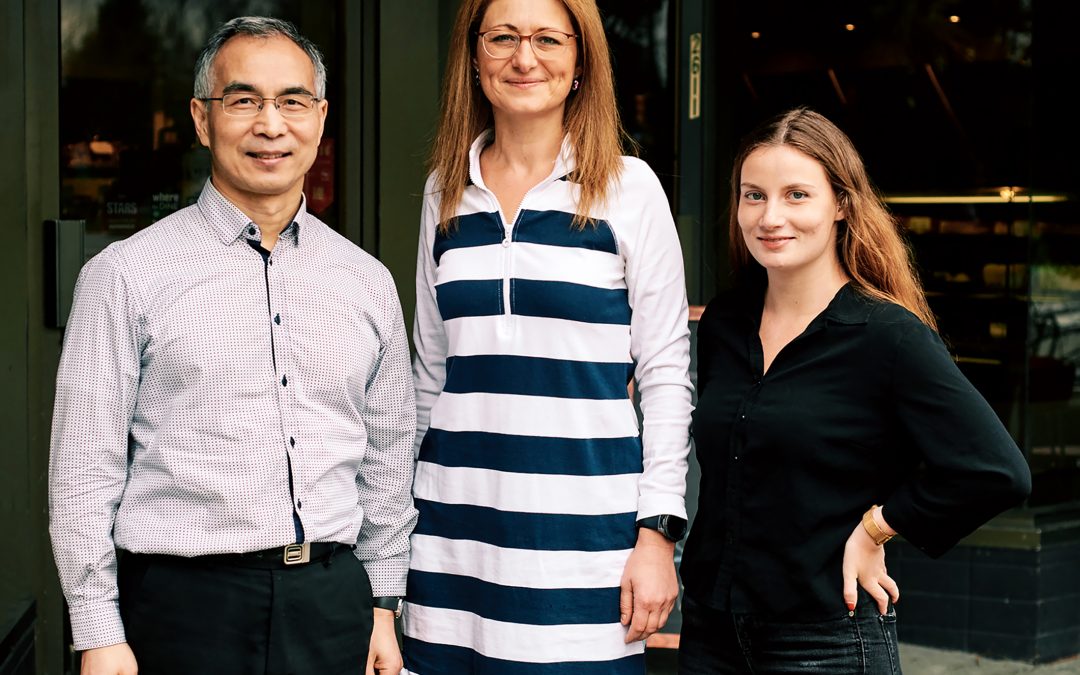
Vancouver Chinese and English Certified Translator and Interpreter An interview with a Certified Translator and Interpreter in Vancouver At Vancouver-based translation company LingoStar, we help our clients find a professional interpreter or translator who will fit their exact needs. For 14 years, Lenka de Graafova, LingoStar’s Managing Director, has been working with Wenhui Zhong, a certified translator (Chinese/English) and interpreter (Mandarin/English and Cantonese/English), based in Vancouver. Wenhui has worked as a Chinese Mandarin and Cantonese interpreter at all levels of Canadian governmental departments and agencies as well as companies in the legal, financial, medical, IT, media and gas industries, to name but a few. With this Star Story interview, we aspire to allow our readers to see how it all works behind the scenes of the interpreting profession. In this case, we introduce you to Chinese interpreting specifically. What does it take to become an interpreter? How do you handle the stress of interpreting and fatigue? What is the difference between Mandarin and Cantonese interpreting? Wenhui has kindly accepted to share his experience with us! Check out our interview! You are a Chinese translator and a professional interpreter in both Mandarin and Cantonese. These are two varieties of spoken Chinese that are actually very distinct. Can you explain how you became fluent and professional in both? I grew up in the city of Guangzhou, also known as Canton in southern China. It’s the traditional place where immigrants leave to go to other parts of the world like Southeast Asia and North America. When people talked about Chinese immigrants about 50 years ago, they were actually talking about Cantonese...